
Why “Can’t Help Falling in Love” Became Elvis Presley’s Most Enduring Love Song
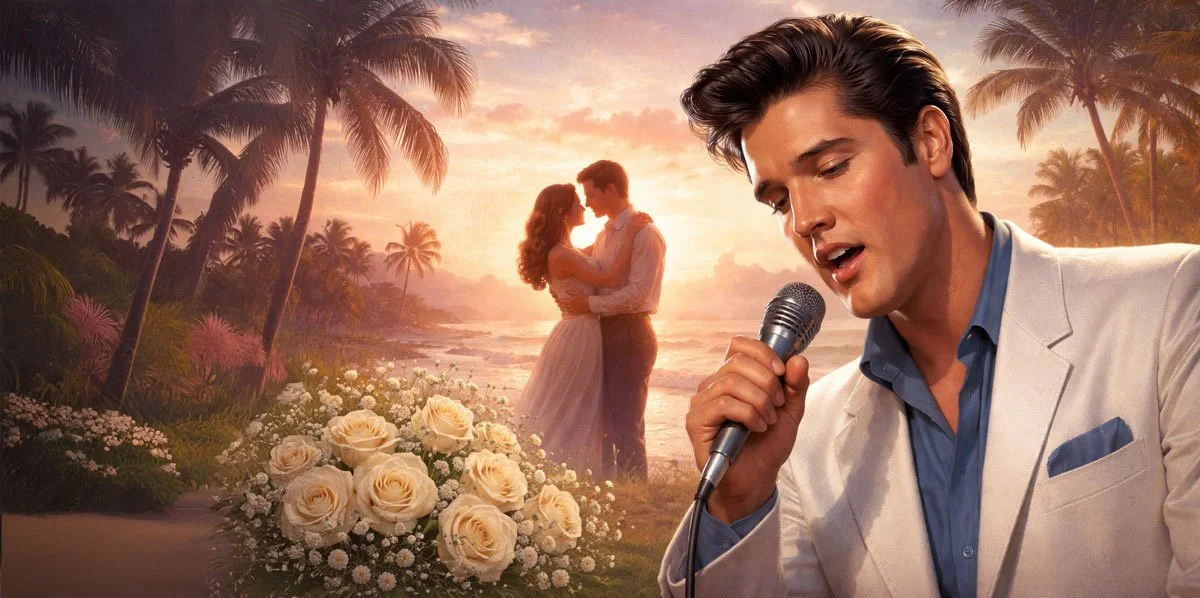
How Elvis Turned “Can’t Help Falling in Love” into a Timeless Ballad That Still Defines Romance Across Generations
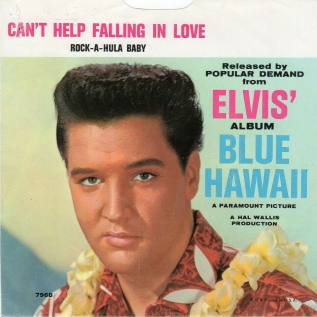
Some songs age. Others don’t just survive time—they absorb it. Can't Help Falling in Love is one of those rare pieces that seems to grow more permanent the further it travels from its origin. First released in 1961 and introduced to the world through the film Blue Hawaii, the song has long since detached itself from that setting. What remains is a quiet, nearly unavoidable presence—one that keeps resurfacing at weddings, movies, commercials, concerts, and cultural moments that require sincerity without irony.
At a glance, the song appears almost too simple. It’s short. It’s slow. It doesn’t show off. But simplicity is deceptive. “Can’t Help Falling in Love” endures not because it tries to impress, but because it refuses to explain itself. It presents love as something inevitable—less a choice than a condition—and that framing has proven timeless.
A Melody Older Than Elvis
Like several of Elvis Presley’s most enduring recordings, “Can’t Help Falling in Love” didn’t begin as a pop song. Its melody traces back to “Plaisir d’amour,” an 18th-century French love song attributed to Jean-Paul-Égide Martini. The tune already carried centuries of emotional weight before Elvis ever stepped into the studio. By the time it reached him, the melody had been stripped down to something almost skeletal—recognizable, restrained, and emotionally direct.
This wasn’t a coincidence. Elvis had grown increasingly interested in material that allowed him to slow down. After the frenetic early years of rock ’n’ roll and the disruption of his military service, his music in the early 1960s leaned toward polish, control, and emotional clarity. “Can’t Help Falling in Love” fit perfectly into that shift. It didn’t demand movement. It demanded presence.
Writing Love Sans Drama
The lyrics, written by Hugo Peretti, Luigi Creatore, and George David Weiss, avoid grand declarations. There’s no conquest, no heartbreak, no pleading. Instead, the song opens with a gentle acknowledgment of uncertainty—“Wise men say, only fools rush in.” It’s cautious. Almost skeptical. And then, quietly, it surrenders.
What makes the song remarkable is that it never explains why love happens. It simply states that it does. The narrator isn’t overwhelmed by passion or swept away by desire; he’s resigned, in the best possible way, to the inevitability of feeling. That resignation is the song’s power. Love isn’t framed as a dramatic act—it’s framed as gravity.
Elvis as a Vessel, Not a Performer
By 1961, Elvis Presley was no longer fighting to define himself. The early panic about his image had faded, replaced by a smoother, more controlled public persona. On “Can’t Help Falling in Love,” Elvis doesn’t perform at the listener. He doesn’t push the emotion forward. He steps back and lets it arrive on its own.
His vocal delivery is measured and restrained. There’s no vocal acrobatics, no attempt to wring drama from the melody. That restraint allows the listener to project their own meaning onto the song. It feels personal not because Elvis makes it so, but because he leaves room for it to be.
This quality—Elvis as a vessel rather than a spectacle—is key to why the song continues to work in so many contexts. It adapts without losing itself.
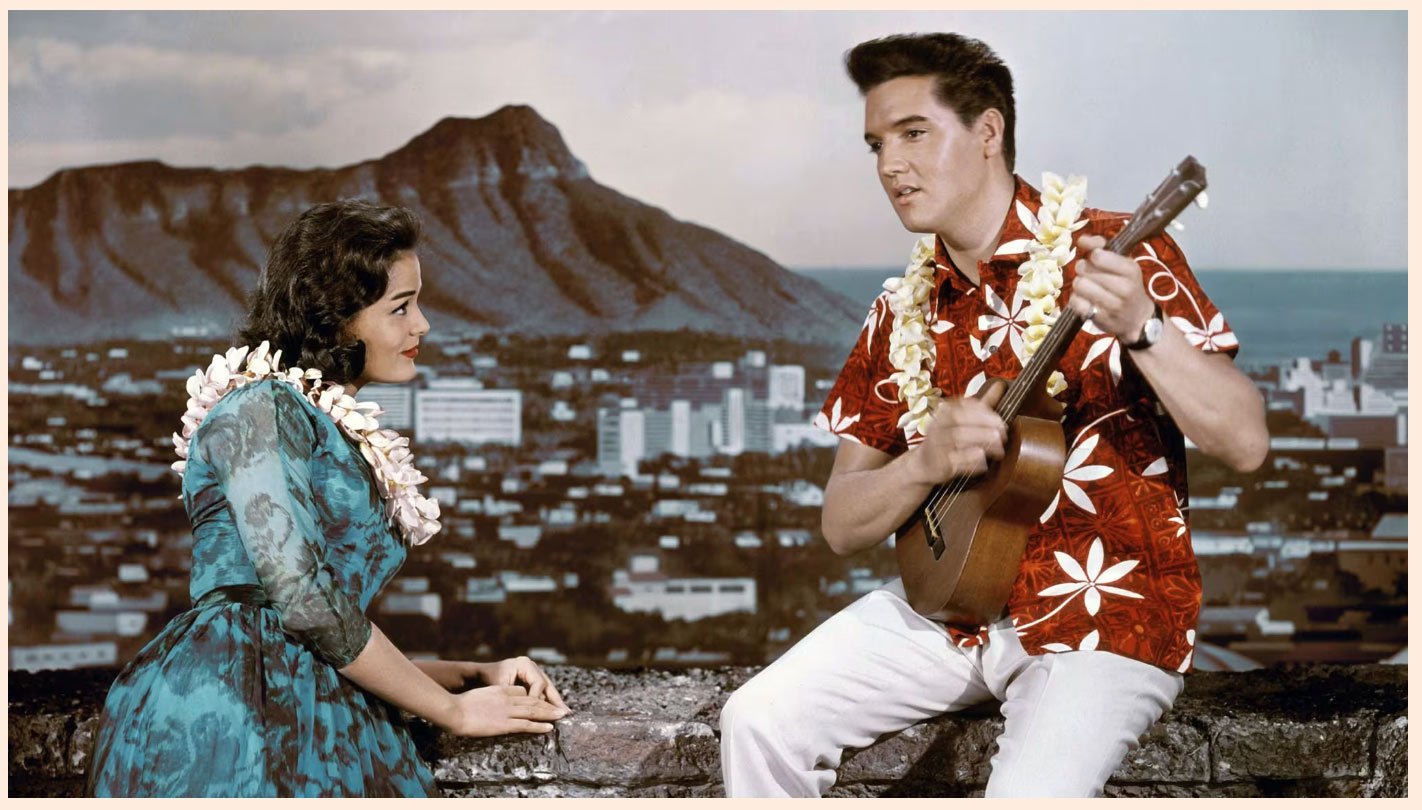
Joan Blackman and Elvis Presley in ‘Blue Hawaii’
From Movie Moment to Cultural Artifact
Originally recorded for Blue Hawaii, the song was tied to a specific cinematic moment: romantic, idyllic, and carefully staged. Yet it quickly escaped that frame. When released as a single, it climbed the charts and embedded itself into popular consciousness independent of the film.
Unlike many soundtrack songs, “Can’t Help Falling in Love” didn’t feel like an accessory. It felt like a statement. Its success wasn’t driven by novelty or narrative, but by emotional utility. It became something people reached for when they needed a shorthand for tenderness.
The Wedding Song That Refuses to Age
Few songs are as closely associated with weddings—and yet so rarely feel dated—as “Can’t Help Falling in Love.” That’s because it avoids cultural markers. There’s nothing about the lyrics that anchors it to a decade, a trend, or a worldview. It doesn’t describe roles, expectations, or futures. It simply acknowledges attachment.
That universality allows the song to persist across generations. It can be sincere without being sentimental, romantic without being theatrical. It doesn’t instruct listeners how to feel; it gives them permission to feel what they already do.
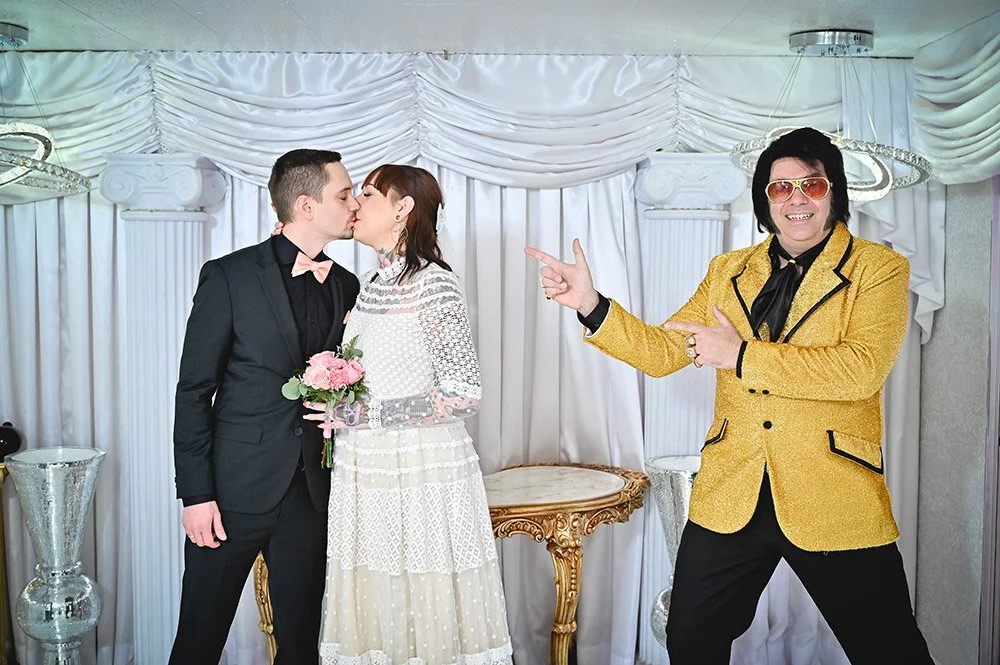
Photo courtesy of the Famous Little White Chapel
Reinvention Without Replacement
Over the decades, the song has been covered by countless artists across genres—pop, reggae, indie, punk, orchestral. Each version emphasizes a different emotional texture: vulnerability, nostalgia, joy, melancholy. And yet, none have replaced Elvis’s original. They orbit it.
This is an important distinction. Many classic songs survive through reinterpretation. “Can’t Help Falling in Love” survives despite reinterpretation. Every cover points back to the original recording, reinforcing its central position rather than challenging it.
The Closing Song That Became a Ritual
Late in his career, Elvis frequently used “Can’t Help Falling in Love” as a closing number in live performances. That choice wasn’t accidental. The song functioned as a release—a gentle landing after the intensity of the show. It slowed the room down. It reminded the audience that beneath the spectacle was something human.
In those performances, the song became less about romance and more about connection. It was a moment of collective quiet, a shared acknowledgment that something meaningful had just occurred. Few artists find a song that can perform that function. Fewer still make it look effortless.
Why It Still Works
More than sixty years after its release, “Can’t Help Falling in Love” continues to appear in new contexts: films, television, commercials, social media, personal milestones. Its durability isn’t rooted in nostalgia alone. It works because it articulates a feeling that hasn’t changed.
Love, in this song, isn’t dramatic or transformative. It’s unavoidable. That framing feels increasingly radical in a culture obsessed with choice, performance, and control. “Can’t Help Falling in Love” suggests that some things happen whether we plan them or not.
A Song That Refuses to Explain Itself
Perhaps the most modern quality of the song is its refusal to over-communicate. It doesn’t analyze love. It doesn’t justify it. It doesn’t resolve it. It simply states a condition and ends.
That restraint is why the song keeps finding new listeners. It doesn’t ask to be understood. It asks to be felt.
And in a world increasingly crowded with noise, explanation, and performance, that quiet certainty may be Elvis’s most enduring legacy.
