
Elvis Presley’s Birth: The Day the King Entered the World
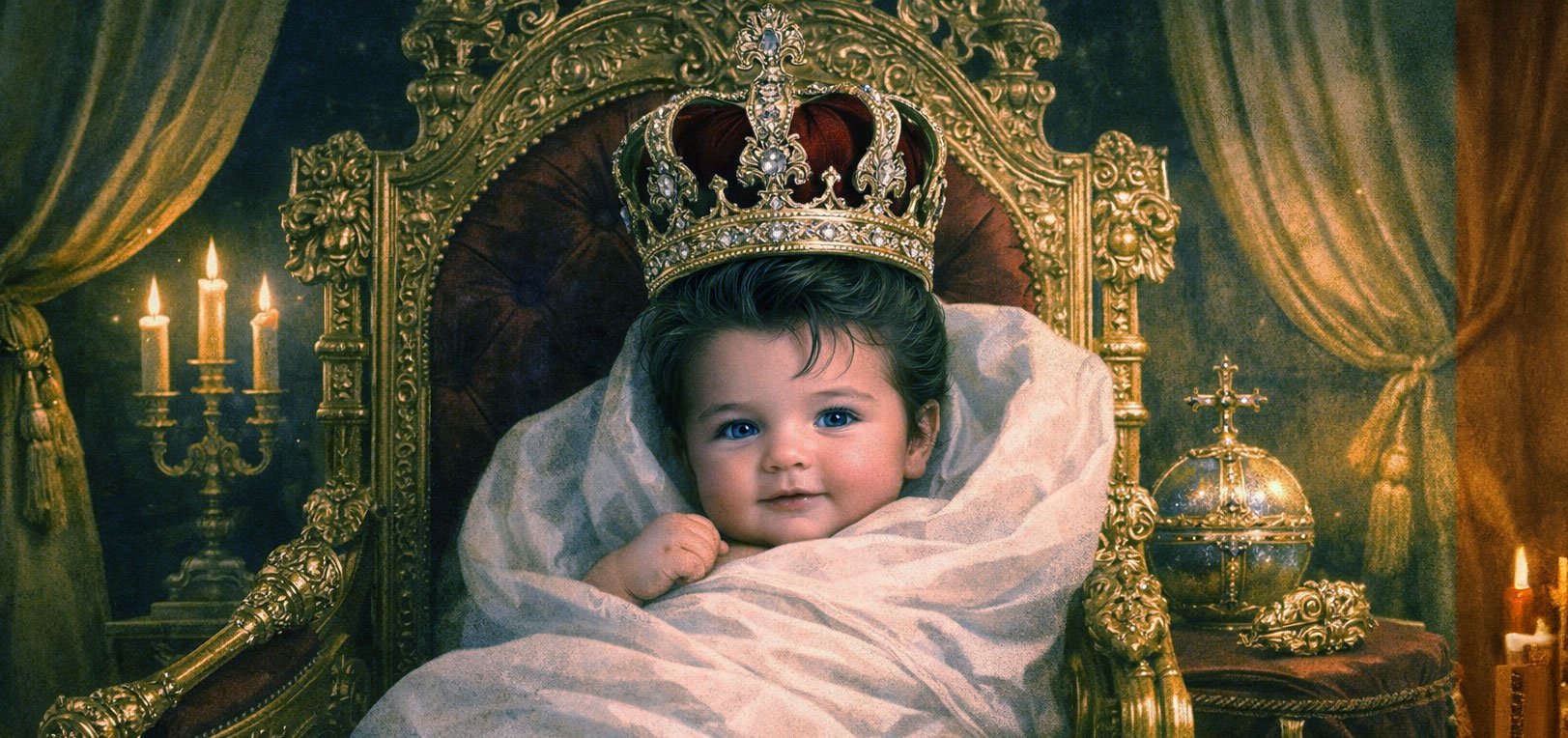
Elvis Aaron Presley was born on January 8, 1935, in Tupelo, Mississippi, a small town that could hardly have imagined it would become synonymous with the most influential popular musician of the 20th century. His birth was quiet, uncelebrated, and shadowed by tragedy—yet it would come to symbolize the beginning of a seismic cultural shift that would reshape music, fashion, and identity across the world.
Elvis did not enter the world alone. He was born a twin—the second of two brothers, arriving minutes after his sibling, Jesse Garon Presley, who was stillborn. That loss, experienced in a two-room shotgun house during the depths of the Great Depression, would become one of the defining emotional undercurrents of Elvis’s life.
A Twin Birth Marked by Loss
Elvis’s mother, Gladys Love Smith Presley, gave birth at home with the assistance of a midwife. Twin births in the 1930s—especially in rural Mississippi—were dangerous and often fatal. Medical intervention was minimal, prenatal care limited, and complications frequently went untreated.
Jesse Garon Presley was born first, weighing just over four pounds, and was stillborn. Elvis followed shortly after, alive but small and fragile. The loss of Jesse was devastating to Gladys, who reportedly never fully recovered emotionally. She would speak of Jesse throughout Elvis’s childhood, and many biographers believe that the idea of a “missing twin” became deeply embedded in Elvis’s psyche.
Some psychologists have suggested that Elvis developed a lifelong sense of incompleteness, a feeling that he was meant to share life with someone who never arrived. While impossible to quantify, the theme of loneliness—despite immense fame—runs consistently through Elvis’s adult life.
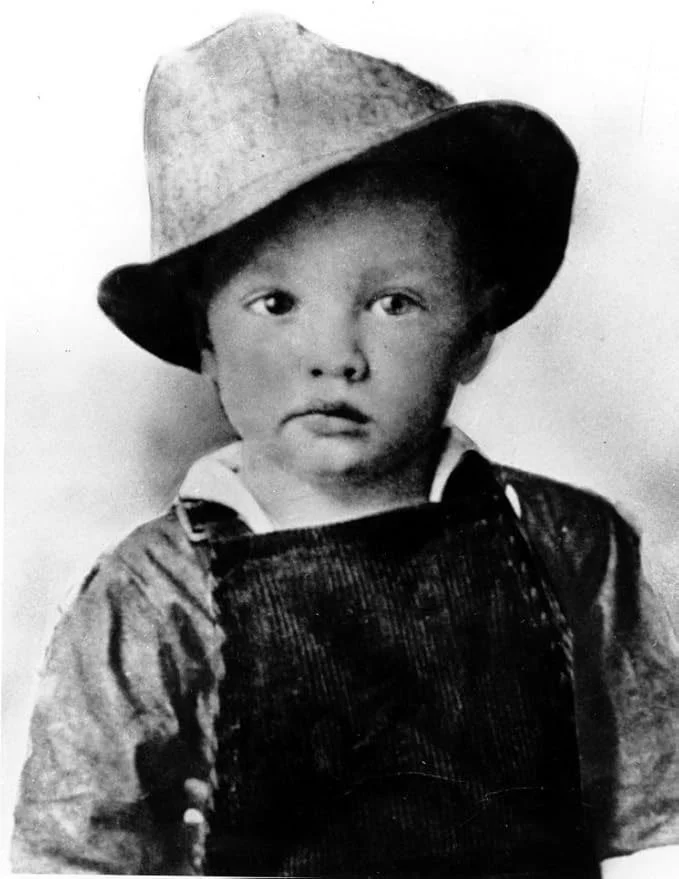
The Meaning Behind Elvis’s Name
Elvis was named Elvis Aaron Presley, though the spelling of “Aaron” would later change. Originally, his middle name was spelled “Aron,” likely chosen to mirror the single-syllable rhythm of “Jesse Garon.” After Elvis’s death, his gravestone was updated to read “Aaron,” reflecting the more traditional biblical spelling.
Names held significance in the Presley household. Jesse Garon’s name was intentionally biblical, and the matching sound of “Garon” and “Aron” was no accident. It reinforced the idea that Elvis was always meant to be part of a pair.

Born Into the Great Depression
Elvis entered the world during one of the harshest economic periods in American history. 1935 Mississippi was deeply impoverished, particularly for working-class families like the Presleys. His father, Vernon Presley, struggled to maintain steady work, taking on odd jobs wherever he could. The family’s income was unstable, and financial insecurity was constant.
The small house where Elvis was born—now preserved as a historic site—cost only a few dollars to build. It lacked indoor plumbing and electricity. Music, however, was free. Gospel hymns filled the Presley home, carried by Gladys’s powerful singing voice and the influence of the local Pentecostal church.
These early musical surroundings would profoundly shape Elvis’s sound. Long before rock and roll, he absorbed gospel, blues, and country—genres rooted in emotion, struggle, and faith.
January 8: A Birthday That Became a Cultural Event
As Elvis’s fame grew, January 8 evolved from a private birthday into an international event. By the late 1950s, fans were already marking the date with radio tributes and gatherings. After his death in 1977, January 8 took on even greater significance.
Each year, thousands of fans travel to Graceland to commemorate Elvis’s birthday. Celebrations include candlelight vigils, concerts, exhibits, and moments of reflection. Unlike many celebrity birthdays, Elvis’s is treated less like a party and more like a remembrance—an acknowledgment of cultural impact rather than mere fame.
Who Shares Elvis’s Birthday?
January 8 is a notable date, shared by several influential figures across music, film, and history:
David Bowie (1947–2016): One of the most transformative artists of the 20th century, Bowie’s career—like Elvis’s—redefined what popular music could be.
Stephen Hawking (1942–2018): Renowned theoretical physicist whose work reshaped modern cosmology.
Bob Eubanks (1938–2023): Television personality best known for hosting The Newlywed Game.
Kim Jong-un (1983– ): North Korean leader, though his exact birthdate has been subject to historical debate.
The coincidence of Elvis and Bowie sharing a birthday has often been noted by fans, as both artists challenged norms, transformed identity in music, and influenced generations of performers.
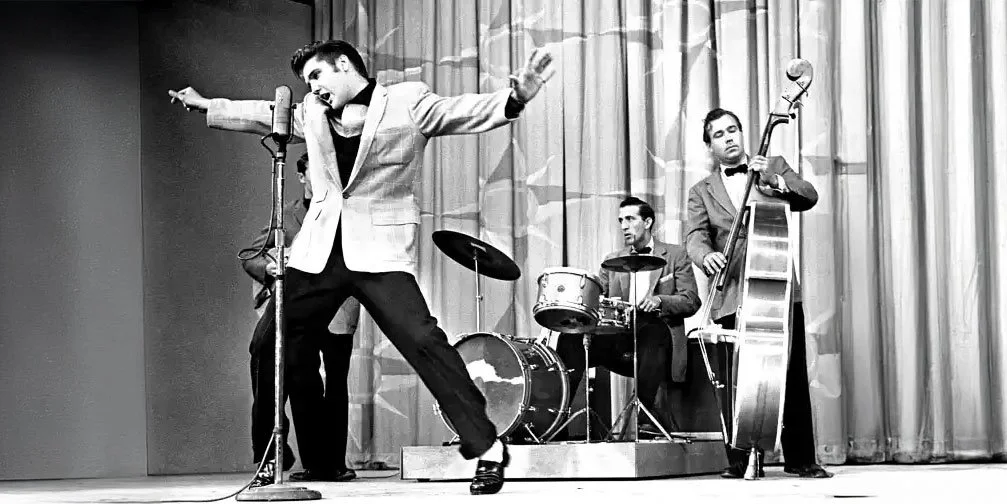
Astrology, Symbolism, and the Capricorn King
Elvis was a Capricorn, a zodiac sign traditionally associated with ambition, discipline, and perseverance. While astrology is subjective, many fans see parallels between Capricorn traits and Elvis’s relentless drive, work ethic, and eventual struggle under immense responsibility.
Symbolically, being born just days after the new year has also been viewed as fitting for an artist who represented something entirely new. Elvis arrived at a time when America was desperate for hope, and two decades later, he would embody youthful rebellion and cultural transformation.
The Shadow of Jesse Garon
The presence of Jesse Garon loomed quietly over Elvis’s life. Elvis is known to have visited Jesse’s grave, and some close to him believed he felt a sense of responsibility to live fully “for both of them.”
Elvis’s deep emotional sensitivity—often misunderstood as excess or indulgence—may have roots in that early loss. His connection to gospel music, his generosity, and his intense attachment to family all point to a man shaped by grief long before fame arrived.
In many ways, Elvis lived as both a singular figure and half of something unfinished.
From Humble Birth to Immortality
There was nothing outwardly extraordinary about Elvis Presley’s birth. No crowds gathered. No headlines were written. He was born poor, in a small Southern town, during a period of national hardship—and his arrival was marked by death as much as life.
Yet from that moment emerged a figure who would redefine popular culture, bridge racial divides in music, and leave an imprint that continues decades after his passing.
Every January 8, fans don’t simply celebrate Elvis’s birthday. They reflect on where he came from, what he overcame, and why his story still matters. His birth reminds us that greatness can emerge from the most unlikely circumstances—and that sometimes, history begins quietly, in a two-room house, with a cry that changes the world.
